

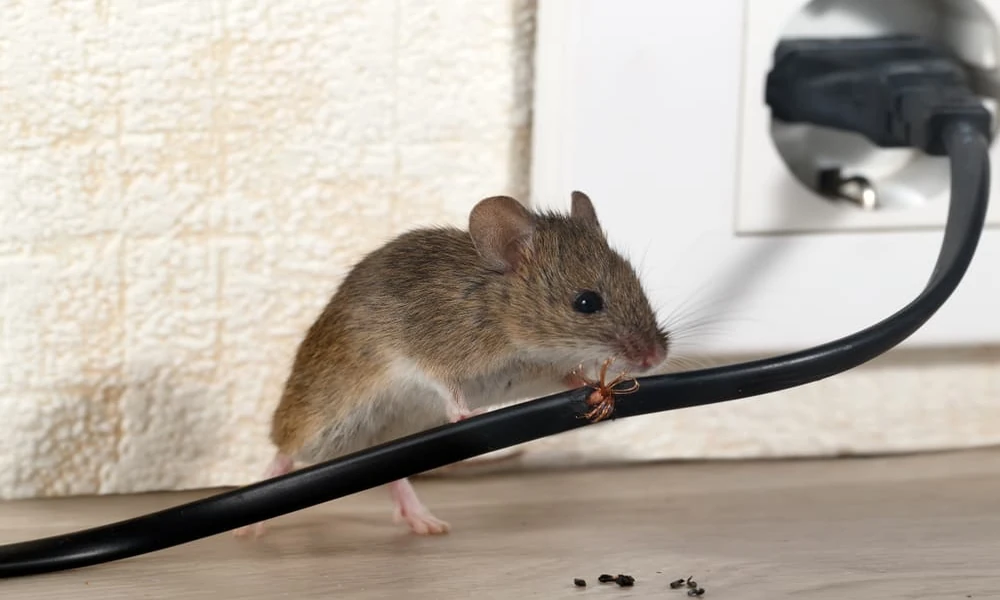
A barn full of feed, a shed stacked with seed bags, or a detached garage nobody checks for weeks is exactly the kind of place rodents settle in. Across the rural Northland, from Lawson to Plattsburg, our Kansas City pest control calls about outbuildings pick up every fall, when mice and rats move in from harvested fields. Trapping helps, but keeping rodents out takes changes to the building and how it is used. These eight tips are the ones that make the biggest difference.
1. How small a gap do you need to seal?
Smaller than most people expect. The CDC notes that a mouse can fit through a hole about the size of a dime and a rat through one about the size of a quarter. Check where siding meets the foundation, around pipes and wiring, at roof eaves, and along gaps in metal siding. Cover openings with quarter-inch hardware cloth or sheet metal. Mice and rats chew through chicken wire, foam, and plastic quickly.
2. Can rats burrow under an outbuilding?
Yes, and Norway rats are especially good at it. For sheds without a poured foundation, many extension services recommend burying an L-shaped skirt of hardware cloth about 12 inches deep, with the bottom bent outward about 6 inches. A strip of gravel along the base also discourages digging and makes fresh burrows easier to spot.
3. Why do barn and shed doors let rodents in?
Doors on outbuildings rarely seal tightly, and the gap under a sliding barn door or warped shed door is often an open entry for rodents. Keep the gap under any door to less than a quarter inch. Rubber sweeps alone get chewed through, so add a metal kick plate or a sweep with a metal edge. Keep doors closed overnight, when rodents are most active.
4. How should you store feed and seed?
Store feed and seed in galvanized metal cans with tight lids, not in the paper or woven bags they come in. Rodents chew through bags and plastic bins easily. One torn bag of chicken feed or birdseed can feed a growing rodent population for weeks.
5. Does spilled feed really make a difference?
It does. Spilled grain under feeders, birdseed left in a shed, or pet food left out overnight gives rodents a steady food supply. Sweep up spills daily, use feeders designed to catch overflow, and pull pet and livestock food at night when you can.
6. Where should you keep stored items?
Get everything off the floor and away from the walls. Stack hay, lumber, and boxes on pallets, and leave an open aisle of about 18 inches along the walls. That gap takes away hiding places and lets you spot droppings or gnaw marks at a glance.
7. What should you do around the outside of the building?
Keep the area around the building trimmed and open. Mow tall grass and weeds near the foundation, keep firewood and scrap piles off the ground and away from walls, and avoid stacking materials against the siding. Rodents prefer to travel under cover, so open ground makes it harder for them to reach the building unseen.
8. How can you use traps and bait safely in a barn?
Use traps or bait stations along walls where you see activity, and check them regularly. Barn cats, dogs, owls, and hawks can be poisoned by eating bait or rodents that ate it, so rodenticides call for care. EPA rules require consumer rodent baits to be sold in tamper-resistant bait stations, and the product label is legally binding on where and how you use it. If a shed has been closed up, air it out for 30 minutes before cleaning. Spray droppings with a 1-to-10 bleach solution instead of sweeping, as the CDC recommends because deer mice can carry hantavirus.
When should you bring in Zip Zap Pest for Kansas City pest control?
Call a professional when you are still seeing fresh droppings after sealing and trapping, when you find burrows along a foundation, or when rodents are getting into stored feed. Zip Zap Pest, ZipZap Termite & Pest Control, is a family-owned company in Lawson led by Board-Certified Entomologist Jeff Preece and is QualityPro certified. Its rodent control service includes an inspection to find entry points and nesting areas, exclusion work, and ongoing monitoring. The company serves both residential and commercial properties, including rural Northland communities such as Plattsburg, Lathrop, Polo, and Cameron.
What matters most when rodent-proofing an outbuilding?
Rodent-proofing works best when the building is hard to enter and offers nothing worth staying for. Seal the gaps, protect the foundation, store feed in metal, and keep things clean and off the floor. Then monitor so you catch new activity early. Late summer and early fall, before rodents move in from the fields, is the best time to do this work. If rodents are already established, a Kansas City pest control professional can inspect the building and help you get ahead of the problem before winter.
