

Clearing the Air on Testing Schedules
Office tenants can spend eight hours or more a day inside your building, so the air they breathe has a direct effect on how comfortable and productive they feel. That’s why plenty of commercial landlords eventually ask the same question: how often should we be checking? There isn’t a single answer that fits every property. The right schedule for indoor air quality testing for office buildings depends on the building’s age, how it’s used and what’s happening around it. Some owners also weigh up whether add-ons like environmental radiation testing make sense for their space. Here’s a practical way to think it through.
What an Air Quality Test Actually Looks At
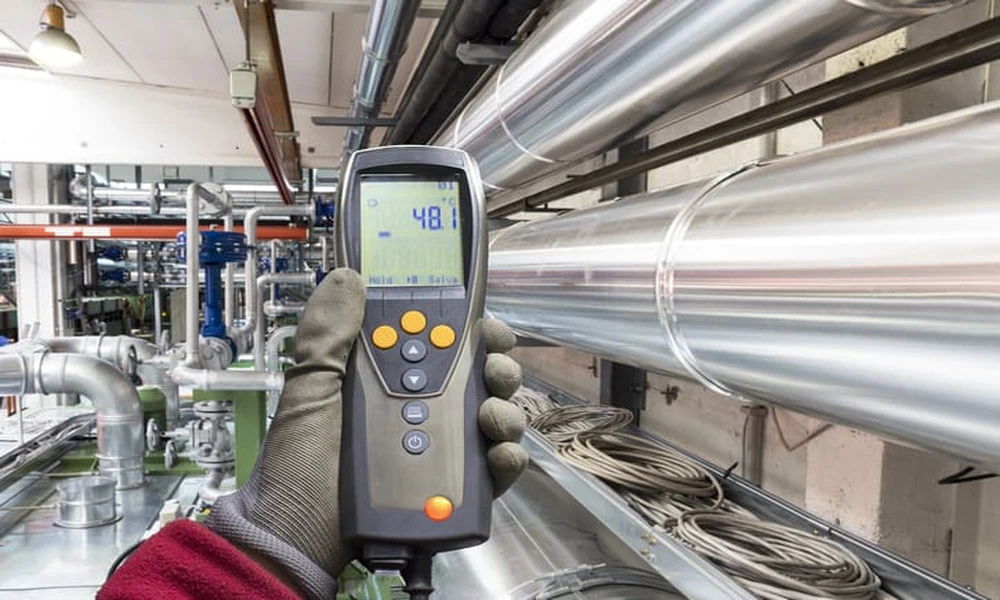
A typical assessment measures several things at once. Carbon dioxide levels give a sense of how well fresh air is circulating, while temperature and humidity readings show whether the space stays comfortable. Fine particles, often listed as PM2.5 and PM10, can drift in from traffic or construction outside.
Testers may also check for volatile organic compounds and formaldehyde, which can be released by paint, carpets and new furniture, along with carbon monoxide and airborne mould or bacteria. Together, these readings give indoor air quality testing for office buildings a fuller picture than any single measurement could, and they help pinpoint whether a problem lies with ventilation, materials or outside sources.
Factors That Shape How Often You Test
No two buildings face quite the same conditions, and certain features call for closer attention. Before setting a timeline for air checks or environmental radiation testing, think about these points:
- How densely the floors are occupied, since more people in a smaller space can push carbon dioxide levels up faster.
- The age and upkeep of your air-conditioning and ventilation systems, as dirty filters and ducts can reduce how much fresh air reaches each floor.
- Whether there’s ongoing construction, heavy traffic or haze nearby that could send more outdoor particles through air intakes.
- The types of tenants you host, because labs, clinics or food outlets may introduce odours and compounds that a standard office wouldn’t.
Where Radiation Checks Fit In
Radon is a naturally occurring radioactive gas that can seep from soil and certain building materials, such as some types of stone. It has no colour or smell, so the only way to know whether it’s present is to measure it. Levels tend to be higher in basements and ground-floor spaces where air doesn’t move as freely.
Radon doesn’t always show up in standard indoor air quality testing for office buildings, since it needs its own detectors and often a longer measurement period. For most properties, a one-off baseline reading is a sensible starting point. If results come back low, there’s usually little need to repeat it unless the building undergoes major structural work.
A Practical Testing Timeline
Rather than one fixed interval, consider pairing routine checks with event-based tests, including environmental radiation testing where relevant:
| Situation | Suggested Timing | Why It Matters |
| Routine baseline | Once a year is a common starting point | Sets a benchmark and helps spot gradual changes in ventilation. |
| After renovations or fit-outs | Before tenants move back in | New paint, flooring and furniture can release compounds for weeks. |
| Tenant complaints | As soon as practical | Stuffiness or odours are easier to resolve when checked early. |
| Haze or nearby construction | During and shortly after the period | Outdoor particles can enter through fresh-air intakes. |
| Basement or ground-floor units | An initial check, then after major works | Radon can collect in lower areas with limited airflow. |
The Landlord’s Air Quality Cheat Sheet
- Air tests usually measure carbon dioxide, particles, humidity and VOCs.
- Occupancy, building age and nearby works all affect how often to test.
- Radon checks need separate equipment and suit lower-level spaces most.
- Pair yearly baseline tests with checks after renovations or complaints.
- Clean filters and ducts support better results between scheduled tests.
Building a Routine Tenants Can Rely On
A testing schedule works best when it’s tied to the rest of your building maintenance. Air-conditioning filters, ducts and fresh-air dampers all play a role in what shows up in your results, so regular servicing between tests helps keep readings steady. Keeping a simple record of each test, along with any follow-up work, also makes it easier to spot patterns over the years.
It’s worth sharing a summary of results with tenants, too. Clear information shows that the building’s upkeep is being taken seriously, and it gives tenants a way to flag concerns early. Since local guidelines can change, check the current recommendations for commercial premises whenever you review your schedule.
Contact Newway Air Conditioning to discuss air quality checks and ventilation servicing for your commercial property.
