

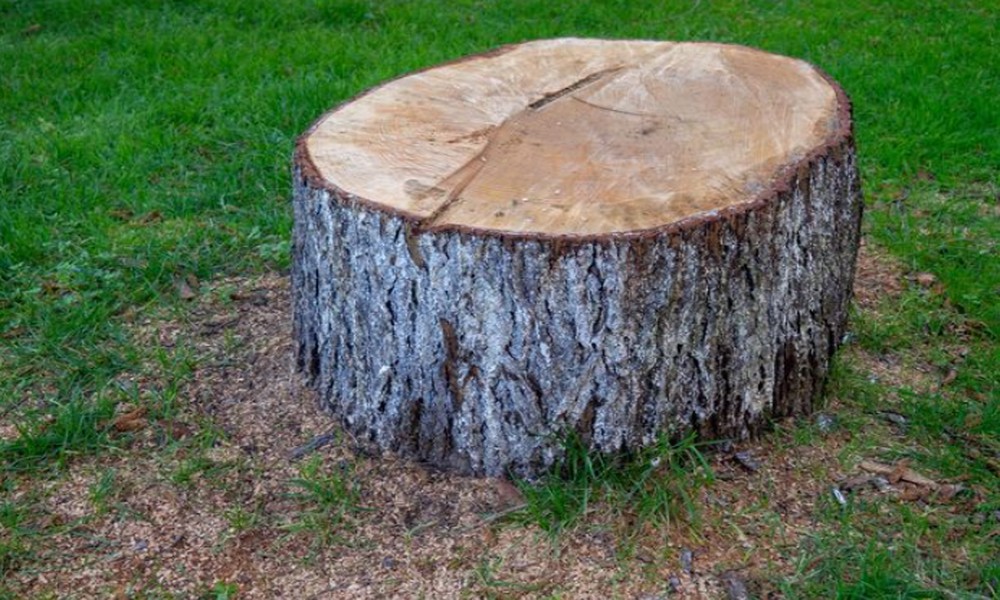
Tree stumps can be stubborn. You’ve probably ignored it at first if you have ever had a stump in your yard following a tree removal. You may even place a potted flower on top or think it’s “rustic”. But it eventually gets in your way. It gets in the way when you are mowing. Children can stub their feet. The wood begins to rot, attracting insects.
How can I get rid without ruining my entire yard?
This is where the idea to remove a stump naturally comes into play. There’s no need for heavy machinery or harsh chemicals. Just a little patience, some biology and elbow grease. Arbor Wise Tree Service has walked many homeowners through the process. It’s not easy, but it is doable.
Why go natural?
Rent a grinder or call a contractor. You can also buy chemical stump removers at your local hardware store. These options are fast and efficient. They can be the best choice if the stump needs to be removed today. Natural removal is appealing to some people for several reasons.
- Safety. Safety.
- Environment. You can use natural processes and time instead of harsh accelerators.
- Cost. Many natural methods can be done with items you have around the house: soil, water, table scraps, and mulch.
- Satisfaction. It’s rewarding to know that you have outlasted the stump and worked with nature rather than against it.
It’s not flawless. Depending on the size of the stump, it can take several months or even years. But if you’re patient, it works.
Basics of Stump Decay
Most people are unaware that the moment the tree is cut, the stump starts to die. However, this does not mean the tree has disappeared. The roots can store moisture and nutrients which make the wood resistant to decay.
Natural stump removal has a simple goal: accelerate decay. Imagine it as composting on a larger and more stubborn scale. Here, fungi, bacteria and insects will be your best friends. Keep the stump moist, covered and vulnerable to attract them.
Method 1: Rot-Accelerator Approach
To remove a stump from a tree naturally, encourage the rot.
- Drill holes in the stump. Make several deep holes on the top and side using a large drill bit.
- Add organic matter. Fill in the holes using compost, soil or leftover kitchen scraps. This will attract fungi and bacteria.
- Keep it moist. Pour water regularly into the holes, and cover with mulch or a plastic tarp.
The stump will soften over time. When it becomes spongy you can begin to break it up with an axe and shovel.
This was done on a medium sized oak stump that I had in my backyard. It took me nine months to crumble the wood in my hand, but I was happy to see it transform into a rich, dark material.
Method 2: Fire Carefully
This isn’t for everyone, but it’s still worth mentioning. You can only burn the stump to its roots in certain areas and if local laws allow it. This is not “natural” in the sense of being “eco-friendly”, but it does avoid chemicals and machines.
Then, you would drill more holes, fill them with charcoal or scrap wood, and burn the stump slowly. Fire spreads and smoke isn’t very neighbor-friendly. Arbor Wise Tree Service recommends this method in rural areas where there is plenty of room and safety measures are in place.
Method 3: The Epsom Salt Trick
Epsom salt is a household item that has a thousand uses. One of them is stump removal. It works by drawing out moisture from the wood and speeding up decay.
- As before, drill holes.
- Pack them with Epsom Salt and a bit of water.
- Cover the stump to protect it from rain. (Too much water will wash the salt away).
After repeated application, the wood will dry, crack, and become easy to chip. Epsom salt, a mineral, is safe to use in small quantities.
Method 4: Let Nature do it All
What is the simplest, slowest option? Nothing.
Let the stump remain in place. You can cut it to as near the ground as you can, but let the fungi and insects break it down. It can take many years to do this, but it is the best natural solution if you don’t need the stump.
I’ve watched stumps transform into mini-ecosystems – moss covering the surface, mushrooming after rain and beetles and insects hollowing out the inside. It may not be the most appealing look, but I find it oddly beautiful.
What about the roots?
You don’t have to remove every single root. You don’t. The roots will die once the stump has decayed. They will slowly decompose beneath the ground, and they won’t be a problem unless they are pushing through a foundation or sidewalk.
Roots can sometimes sprout new shoots. This is a common phenomenon with maple and willow. You can cut back the sprouts if you see them. The roots will eventually run out of energy.
Natural removal is always the best option.
This is where I will be honest. Although I prefer the natural approach to many things, it is not always practical.
Waiting a year or more is not realistic if you have a huge stump in your lawn, and you need to clear the area for a patio within six weeks. A stump grinder or professional removal may be the best option in these cases. Arbor Wise Tree Service offers both natural and mechanical methods.
It’s sometimes even a good idea to combine different methods. Once the wood has softened, you can finish by manually chopping it or lightly grinding it.
Last Thoughts
Remember: Patience is key. A stump is dense living wood that resists changes. It will succumb to decay with time, moisture and encouragement.
In the process, you’ll also learn about soil, fungi and how nature recovers what we have left behind. You’ll be rewarded when you finally remove the stump, replacing it with new soil and perhaps even some grass.
We’re always here to help if you feel overwhelmed at any time. Arbor Wise Tree Service can help homeowners decide between slow, natural methods and full-service tree removal. It’s sometimes best to leave the heavy lifting to someone else.
This post was written by a professional arborist at Arborist Largo FL. Robert Miller is the owner of Arbor Wise Professional Tree Care, a locally owned and operated tree service company that offers superb lawn care by the most experienced Arborists. Arborwise Tree Services is a tree removal company that offers stump removal, tree pruning, stump grinding, fertilization, and tree restoration. We have an extraordinary lawn care industry notoriety covering the Pinellas county area.
